God As Lord Of Life And Joy

Genesis 1:1-2 In the beginning God created the heaven and the earth. And the earth was without form, and void; and darkness was upon the face of the deep. And the Spirit of God moved upon the face of the waters.

I am no Hebraist, but I have learned a little about the Hebrew in these first two verses. The word for “God” throughout Genesis 1 is “Elohim,” a plural noun more accurately rendered as “Gods.” The Hebrew word rendered as “Spirit” means, at one and the same time, spirit, wind, and breath. More mysterious is the word rendered as “moved” in the KJV. (“The Spirit of God moved upon the face of the waters.”

That word is “Merakhefet” – the root verb “RHF” is a feminine, present tense participle. In English, our verbs don’t have gender, but a present tense participle is a verb that ends with “ing.” Scholars have only a vague idea of what “merakhefet” means. It appears only two other times in any ancient Hebrew writing, both in the Old Testament. One has to do with the trembling or shaking of Jeremiah’s bones in response to the Word of Jehovah.

More helpful for understanding Genesis 1:2 is the only other passage of ancient Hebrew to use the verb, in Deuteronomy 32:10-11.

He found [Israel] in a desert land,

    in an empty, howling wasteland.

He surrounded them and watched over them; 

guarded them as the apple of his eye.

As an eagle stirs up its nest,

    hovering over its young . . . . 

So the imagery here is of a mother eagle. As she is to her nest and her eaglets, so is God to Israel. The word rendered as “hovering” is merakhefet.

So turning back to Genesis 1:2, an alternate translation would be that the Gods’ breath-spirit was hovering, nesting, brooding, or fluttering over the deep. Continue reading

Holy Week and the Hope of Universal Reconciliation

I want to put a plug in for us to celebrate Spirit World Saturday as part of the Holy Week observances of members of The Church of Jesus Christ of Latter-day Saints.

The belief that between his death on Good Friday and his resurrection on Easter Sunday, Jesus visited the world of the dead is not unique to our church. The harrowing of hell is a venerable Catholic tradition that is also found in various other Christian traditions, all of which draw scriptural support from 1 Peter 3, which says that Christ was “put to death in the flesh, but quickened by the Spirit; by which also he went and preached unto the spirits in prison.” Continue reading

Being Placenta

So far, we’ve had two babies. Both boys. I’ve seen them come into the world, wet, followed by placenta. The nurse unfolded the slimy mound and showed it to me. “Look,” she said, “the tree of life.” It actually looks like a tree, the blue blood vessels forking like branches from a trunk. The way the nurse spoke, with rapture, it was clear she was not feigning her amazement. This was an authentic placenta fan. She had me run my finger across the oozy membrane. Like a fish, or ray, or some other deep ocean organism. My wife was less interested. 

And that was not surprising. Her body was full of recovery. The pain, still seeping out of her muscles, and relief swelling in like the tide. Of course, the placenta was nothing in this moment. Some seaweed caught in a wave. This was a moment when a new baby’s cry was filling the room as it tried to latch onto his mother’s breast. And so I took a picture, to show Sarah after. After she had some time to recover. After the baby was less marvelously new. When the miracle of a placenta might be observed for its own beauty, un-eclipsed and un-eclipsing. 

But Sarah never cared much about the placenta. It was, to her, just a little bit gross. Like observing her own fecal matter. Something her body produced that was necessary, but best unobserved. So Sarah is not a placenta fan. She is not like Dia, my brother’s wife, who eats her own placenta after birth. This might seem like crazy-granola-lady-hippie behavior. But it is common in almost all mammals and just about every animal that produces a placenta. There are only a few exceptions including aquatic animals, camels, and most humans. 

Continue reading

We are Losing Precious Members

brown-wooden-church-bench-near-white-painted-wall-133699

People are leaving my church. Good people. People I know. People I like. In response to this modern exodus, I have heard three explanations from within my church community. The first two are rationalization narratives. They attempt to put the community at ease. First, there is the narrative that we are destined to be a small group of believers. The Bible never suggests “the believers” are going to be popular. In the Book of Mormon, Nephi has a vision of the modern-day church and he notes that “its numbers [are] few.” And so declining membership actually seems in line with revelation. Believers are supposed to be a small, peculiar group of persecuted faithful. This is problematic. Continue reading

Millennials and the Millennium

strength-strong-toy-action-figure

As millennials continue to be dissatisfied with religion, leaving churches in greater numbers every year, I have become at times defensive. I’ve wanted to defend my own religious convictions as well as point out how Christianity has colored, beautified, and created the world we’ve inherited. So even if we turn a blind eye to Christianity, we can never really leave it, nor should we want to.

In my experience, the most cited reason my generation offers for their exodus is “hypocrisy.” If a religion that teaches moral principles doesn’t create morally principled people, what good is it? To them, what religion preaches correctly it administers poorly, such as kindness, love, and generosity. And what it believes incorrectly it administers effectively, beliefs around Proposition 8 and most recently the election of Donald Trump who was most fervently supported by white, evangelical men.

So what good is religion? Continue reading

Reconciling Religion and Politics in Post-Obama America

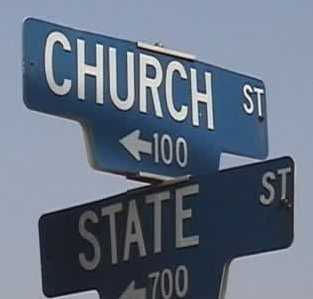
church and state

Hakim’s car smelled faintly of cigarette smoke, but it was clean and he greeted me warmly. Hakim was an African-American man with a raspy voice and a slight southern accent. This was my first experience riding Lyft, and it was a pleasant one. He asked me about my work and told me about his—he recently retired as a parole officer, and drives for Lyft on the weekends. Our conversation eventually turned to politics. I didn’t know what to expect. In the wake of an election that had been described as a “whitelash,” I wanted to tread carefully. I tried to say things that would assure Hakim that I understood something about the racial tensions that were unsurfaced and aggravated during and in response to the election. I wanted him to know that I appreciated President Obama and that I had not supported Trump’s candidacy. I was surprised when he said, “You know, I had a real hard time with this election. I actually voted Republican in the last two. Just couldn’t bring myself to vote for Obama. Religious reasons, you know? I had the same problem with Hillary. But Trump?” The way he said “Trump,” sliding into a raspy falsetto, made me laugh. That and my surprise: a middle-aged, middle-class African-American man voting for McCain and Romney rather than Obama, due to religiously-motivated objections (to gay marriage and abortion, as it turned out). Serendipitously, perhaps, our destination was a church. As I got out, he said, “God bless, my friend.”

I know that people of color are not monolithic, just as I recognize that many are forced to uncomfortable compromises when voting, trying to participate within a system that has often explicitly discouraged their participation, voting for what seems to be the lesser of two evils and the least likely to provoke direct harm to them and their loved ones. It is very likely that Hakim is not consistently conservative. But in a defining moment of American politics, he voted Republican. I’ve often wondered which candidate he voted for in 2016.  He never told me, but apparently it wasn’t a particularly straightforward question for him. Continue reading