Single Narratives About Terrorist Attacks And Police Shootings

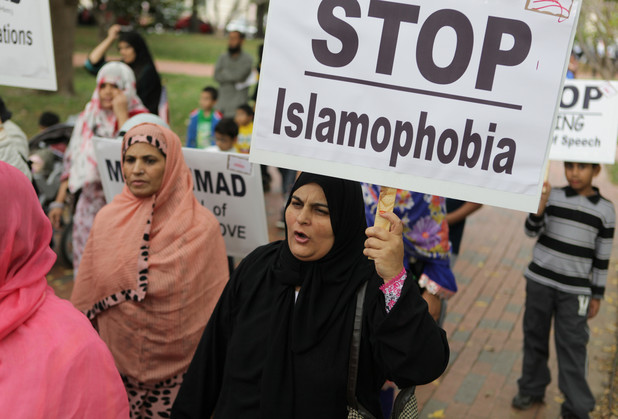
stop-islamophobia

This last week two things coincided: I attended a panel discussion on islamophobia and my facebook friends reacted to the news of Keith Scott being shot by a police officer. These might seem unrelated, but the more I thought about it, the more I realized that these experiences were really about the exact same thing: the human capacity to form narratives and hold on to them. Let’s start with the panel.

Three professors took turns speaking. Their point was that the narrative people have developed about Arabs and Islam is not accurate. People fear Arabs because they’re Muslim. But this is often not the case. There are a lot of Christians, Sikhs, and even agnostic Arabs. And people fear Muslims because of all the terrorist attacks. However, you are much more likely to be killed by lightning than by an Islamic extremist. According to one of the lecturers, Islamic extremism has only killed 109 Americans since September 11th 2001. That might sound like a lot, and every life is precious, but if you run the numbers, there is an infinitesimally small chance that you’ll be one of them. More people die falling out of bed. A lot more: it kills 737 Americans annually. Continue reading

Advice from asaasa1983 that we should all ignore

unnamed.jpg
We recently received a message from “asaasa1983” in response to an article we had written. The article was about helping children nourish healthy sexuality while avoiding destructive and deceptive outlets like pornography. To me it is a relatively secure platform.

Both statistically and within my own anecdotal experience, pornography can have a negative influence on relationships. It’s bad for the viewer and often bad for the people on the other side of the screen—the ones taking the pictures. However, I am not entirely ignorant of arguments against conservative sexual mores. We can come across as uptight, prudish, genophobs. And before I go forward I want to acknowledge that conservative sexual paradigms have at times been restrictive, narrow, and damaging. So there’s certainly some constructive liberal critiques worth listening to.  

Still I was surprised by asaasa1983’s response—so surprised in fact that I reproduce it here in its entirety: Continue reading

Meaning versus Desire: A Theory and Critique of Contemporary Sexuality

Where Do We Come From? What Are We? Where Are We Going” by Paul Gauguin

Today, there are two main economies of sexuality. By “economy,” I mean a complex and dynamic system that centers on some “currency” that the members of the economy seek–something that can be intentionally given, taken, and sought. Economies transform themselves, depending on what is sought and how: the economy “grows,” “shrinks,” or “moves” to a different currency. Economies exist in nature as well as in human society–water economies, economies of reproduction, economies of light: pick your resource.

The currency of one of the economies of sexuality is desire; the currency of the other is meaning. Continue reading

Infertility, Insurance, and Individualism

couple-sunset

My wife and I have been dealing with some infertility issues. Simply put, we would like to have children–in the near future if possible–and it seems that this will require some extra medical attention. As I perused our insurance policy to find out what of this extra attention would be covered, I was disappointed to discover that infertility services and medications are not included in our plan; in fact, they are explicitly excluded. I know very little about the actuarial science involved in designing these policies, so I can only speculate about why this might be the case. Whatever the reason, it seems that we may have to pay out-of-pocket for any fertility treatment we seek with this insurance.

At about the same time that I discovered this, I received an email announcing that, as of the upcoming school year, my insurance policy will be covering “transgender services” (their term, and I do not know what all it entails). Continue reading

What happens when a liberal professor interviews a conservative economist?

Kevin and Tim.00_53_46_13.Still001

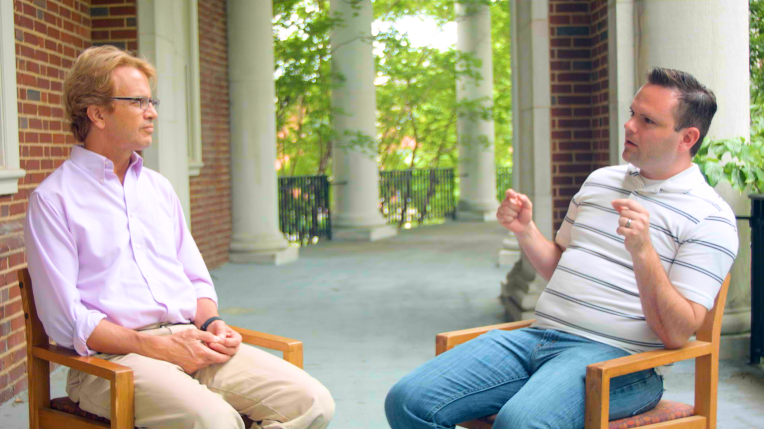
Actually, a surprisingly amiable conversation. We release this fifth Courteous Conversation about minimum wage fittingly on Labor Day. Today celebrates the contribution of laborers—sometimes underpaid and overworked—to our nation’s prosperity and wellbeing.

Continue reading

The Problem with Charter Schools: courteous conversation #4

final trailer.00_00_23_19122.Still001
Maura-Lee

For a lot of us choosing the right school for our children is an important and stressful question. We even buy houses based on school districts. This is a choice that could determine the future success of our children. So it’s no surprise that people have strong feelings around this topic. To David, charter schools offer some attractive alternatives, but Maura-Lee has large reservations.

Continue reading