What Role Should Religion Play in American Politics?

biblewithflag

[We’re happy to publish this guest post, written in response to “Reconciling Religion and Politics in Post-Obama America,” by John Griffin.]

In his March 20 post, David takes on a hot topic of late: whether religious views should be granted a more prominent and respectful place in American political discussion.  David’s answer – from his opening account of a God-fearing African American taxi driver to his warning that “failing to validate” religious voices will lead to social fragmentation – is an emphatic YES.  Without a place for such expression, David argues, the public sphere would become exclusionary and – with respect to fostering social cohesion – ineffective.

Historically, David would seem to be arguing the obvious. After all, religious elements have always played a major role in American politics, and to deny them significant voice ignores history and reality.  It turns out, for example, that one of the most religious groups in the American polity – measured by church attendance, prayer and members’ own self-identification – is African American Protestants, also one of the most loyal Democratic voting blocs.  Why then should those who champion progressive causes and view such groups as important political allies go to such lengths to exclude religious views from political discussion? Continue reading

The Delusions and the Truth of Romance

Image result for soulmate
photo credit: http://www.powerofpositivity.com/soulmate-relationship-signs/

Too many people seek lasting happiness and fulfillment in romantic love, where it is not to be found.

What romantic love offers is agitation, desire, a fevered preoccupation with the object of love, the blithe contemplation of an other. There is beauty and there is truth to be found in romantic love, but no lasting happiness or fulfillment. That “happily ever after” is to be found in romantic love is the first of its delusions.

Yet there is something undeniably beautiful about two souls waltzing in a private heaven, loving and being loved. But one falls when one waltzes in heaven. Romance either lands on the earth of daily life or it combusts in tragedy. By the “earth of daily life” I mean mainly marriage or the modern forms of pseudo-marriage. The only realistic alternative to these is some form of tragedy–breaking up or dying or in some other way being separated. These melancholy obstacles to consummation are the only way to prevent romance from descending into the soil. And that is why romantic novels and movies inevitably end shortly after consummation (traditionally, marriage). The last scene may be the wedding; or the story may play out just long enough to witness the tragic pre- or post-consummation death of one or both lovers (as, e.g., Tristan and Isolde or Romeo and Juliet). Continue reading

Distributive Justice

6693d8767255814f5dce60d5a1d0e5afb4f80b0a714b700a508c1a89b156f622
Thoughts on Forced Redistribution of Wealth

This article was co-written by Matthew Sabey, an economics major, and Brian Sabey.

An important part of our political dialogue is about distributive justice—that is, the justice or injustice of redistributing wealth and other resources in various ways. I’m not just talking about tax brackets and welfare programs; I’m also talking about more subtle means of wealth redistribution such as requiring hospitals to treat people who can’t pay (under EMTALA), thereby shifting the cost to those who can—or requiring everyone to buy insurance and subsidizing those who can’t afford it, with a similar effect. To what degree should the law imitate the great outlaw Robin Hood, taking from the rich and giving to the poor?   Continue reading

Why Don’t Democrats Take Religion Seriously? (From The Atlantic)

This resonated with my thoughts in my last blog post, so I thought I’d share it here. I stumbled upon this video, which appeared at the bottom of an article I was reading that also seems very much in line with The Brothers Sabey: Do the Culture Wars Really Represent America? Check both of them out, and let us know what you think!

Social Media Fatigue

18203307821_5979da3047_b

There’s a feeling you get when you’ve eaten too many potato chips and you catch yourself with your hand in the bag. The compulsion to eat feels absurd. It’s not satisfying, you’re not hungry, and it doesn’t even taste good anymore. So how do you explain your newly salted fingertips? You can’t. You just hate yourself for it.

That’s the sort of feeling I get when I automatically open Facebook moments after closing. Continue reading

Reconciling Religion and Politics in Post-Obama America

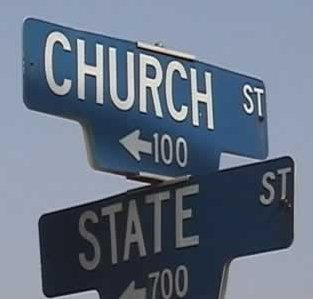
church and state

Hakim’s car smelled faintly of cigarette smoke, but it was clean and he greeted me warmly. Hakim was an African-American man with a raspy voice and a slight southern accent. This was my first experience riding Lyft, and it was a pleasant one. He asked me about my work and told me about his—he recently retired as a parole officer, and drives for Lyft on the weekends. Our conversation eventually turned to politics. I didn’t know what to expect. In the wake of an election that had been described as a “whitelash,” I wanted to tread carefully. I tried to say things that would assure Hakim that I understood something about the racial tensions that were unsurfaced and aggravated during and in response to the election. I wanted him to know that I appreciated President Obama and that I had not supported Trump’s candidacy. I was surprised when he said, “You know, I had a real hard time with this election. I actually voted Republican in the last two. Just couldn’t bring myself to vote for Obama. Religious reasons, you know? I had the same problem with Hillary. But Trump?” The way he said “Trump,” sliding into a raspy falsetto, made me laugh. That and my surprise: a middle-aged, middle-class African-American man voting for McCain and Romney rather than Obama, due to religiously-motivated objections (to gay marriage and abortion, as it turned out). Serendipitously, perhaps, our destination was a church. As I got out, he said, “God bless, my friend.”

I know that people of color are not monolithic, just as I recognize that many are forced to uncomfortable compromises when voting, trying to participate within a system that has often explicitly discouraged their participation, voting for what seems to be the lesser of two evils and the least likely to provoke direct harm to them and their loved ones. It is very likely that Hakim is not consistently conservative. But in a defining moment of American politics, he voted Republican. I’ve often wondered which candidate he voted for in 2016.  He never told me, but apparently it wasn’t a particularly straightforward question for him. Continue reading