
The Fine-Tuning Argument For Intelligent Design

This essay does not pretend to break new scientific ground. Rather, it aims to condense and render generally accessible a powerful, science-based argument in favor of an intelligent designer of the universe and of the earth so as to support intelligent life. This essay will proceed in four steps: (1) summarizing (with Claude’s help) the ways in which the universe in general and the laws of physics are “fine-tuned” for intelligent life; (2) summarizing (with Claude’s help) the ways in which the Earth is fine-tuned for life; (3) quoting some Actual Scientists who do not accept the argument for intelligent design, but whose statements in a podcast discussing the fine-tuning problem, to my mind, strongly support it; and (4) my ultimate evaluation of the evidence, arguments, and remaining questions. Continue reading

Dear Republican Congresspersons: Might Does Not Make Right In Greenland Or Anywhere

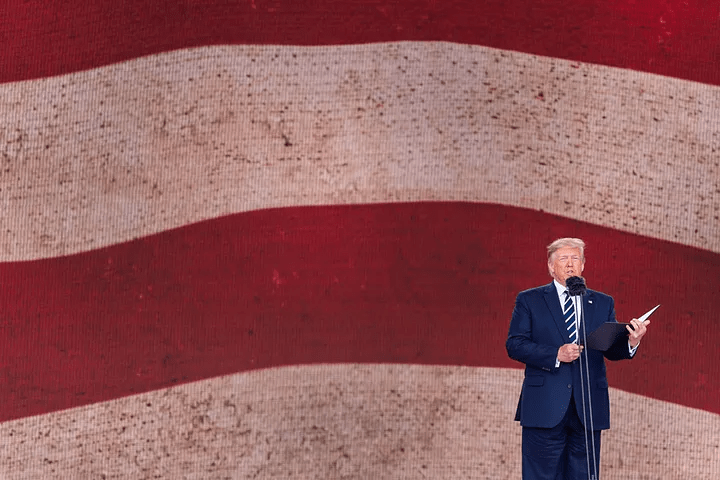
Dear Republican Congresspersons,

I have always considered myself a Republican, because the issues I care the most about are the “moral” issues of social conservatism—family values, keeping a child-centric society, preserving moral boundaries in matters of so-called self-expression, preserving the various means by which our society tells its best and truest story about itself to the next generation, fidelity to the Constitution, which I believe was divinely inspired in a significant degree, preserving those aspects of traditional morality that I believe to be right, conserving and developing a wholesome sense of American identity, conserving belonging and community in our neighborhoods, religious freedom, etc. I acknowledge many of the values underlying these issues are not unique to conservatives. But the Republican Party—the party of Abraham Lincoln—has always seemed to me the better servant of these values. Like many others of my ilk, I have never liked President Trump. 

I have, to a certain extent, rejoiced in my society’s recent cultural rebuke to what the Free Press is calling the “illiberal Left” (cancel culture, the Left’s identity politics, the casual use of terms like “bigot” when opinions about the Left’s pet moral issues diverge from a moral orthodoxy that cannot seem to stay put for a single year, much less a single decade, etc.). But Trump’s strong-arm way of going about his part in that rebuke has always seemed wrong-minded and polarizing to me. Continue reading

In Defense of Extreme Views And Political Compromise

It is commonly believed that the truth is always in the middle. Given any two views or any two disputants or any two accounts of an event, both sides have some of it right and some of it wrong; therefore, both sides need to move towards the center.

While this may be a good rule of thumb when it comes to human disputes—divorces, litigation, discrepancies between two people’s memories, etc., it is nonsense as a rule. It often happens that one side is simply right and the other simply wrong.

More importantly, it is utter nonsense in the realms of thought and creativity. When it comes to world views, thought systems, and artistic schools, to make compromise a rule would merely be to abandon consistency and rigor. Continue reading

Faith and Intellectual Integrity

I hope this essay will be helpful for dealing with honest questions and for helping others who are dealing with honest questions related to the Church of Jesus Christ of Latter-day Saints. Many of the things I write will apply equally or almost equally to faith journeys within other religions as well.

When people leave the Church, I would suspect that their questions about doctrine and history are not usually the main issue, but in many and probably most cases, they are one of the issues. And I think such questions can be more productively dealt with in a Church culture where there is, perhaps appropriately, certain pressures to express certainty and to stand united behind all the teachings of the prophets, and where our manuals and lesson plans tend—again, perhaps appropriately—to focus on reaffirming core doctrine rather than exploring the limits of what we know. Continue reading

Why we must resist demonization, Even of the worst fascists

As I begin to write about the worst Fascists (i.e., the Nazis), it occurs to me that humanity is altogether more wonderful and more terrible than we commonly imagine it, more angelic and more diabolical. The mundanity and the moral and intellectual mediocrity of most lives is not the native and inevitable condition of the average human soul, but rather an impasse between vast forces of good and evil and immense impulses towards life and towards death. From this conflict we seek refuge in numbing routine and stultifying dogma, content for the most part to experience the battle at a safe remove, transmuted into art. Our impulse towards life and effort, fierce as the Sun, is satiated, because we are thinking and acting; and our impulse towards rest and stillness, inexorable as outer space, is mollified because our thoughts and actions rotate, like the Earth itself, in the same circuit every day. Continue reading

A Reader’s Response to Haidt’s The Righteous Mind and The Necessity of Morality Beyond Evolution

I recently read Jonathan Haidt’s book The Righteous Mind: Why Good People Are Divided By Politics and Religion. It is worth reading, but it was a very mixed emotional experience for me. Politically, it was interesting, insightful, and personally affirming, while philosophically it was interesting, insightful, and personally aggravating. Continue reading