
I concluded Part Three by asserting that “society does and should take a hand in directing sexuality towards good results and away from bad ones”—but what counts as a “good” result, and how are good results to be encouraged? These are very important questions, but they are not the questions I am dealing with here. I will say only, in passing, that the authority to answer these questions is entrusted primarily to We the People (and not to the Supreme Court).
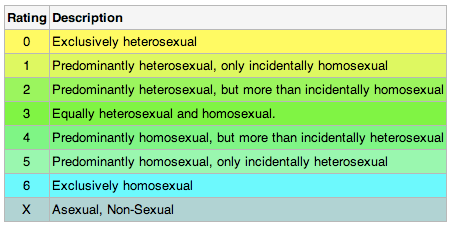
What I am dealing with here is not sexual morality, but sexuality simply as such: what is it? I have given no complete answer, but I have suggested that sexuality is NOT something that just happens to us. In particular, I have argued that (1) sexual orientation is not an immutable (i.e., unchangeable, inherent) characteristic of our natures, and (2) our culture should not impose on individuals a sexual identity based upon that orientation. Currently, our culture does impose such an identity by attempting to place everyone in one of four “immutable nature” boxes—homosexual, heterosexual, bisexual, or asexual. Continue reading →


 The Brothers Sabey