The Accidental Christianity of Hollywood

star-trek-beyond-zoe-saldana-john-cho.jpg

I’m watching Star Trek Beyond and Krall just threatened to kill Sulu in order to coerce the crew into giving him the Abronath (a bioweapon capable of huge destruction). But rather than letting a crew member die, an Ensign named Syl turns over the weapon from its hiding place in the back of her head. It’s a very familiar scene. You find similar scenes in Star Wars, most of the superhero films, and even children movies like Disney’s Hercules. Remember when Hercules gives up his power to save Meg and thus allows Hades to terrorize the city and even assault Mount Olympus?

My complaint is not that this trope has become repetitive (here’s a long list of similar scenes), but that we simply accept it as a legitimate ethical decision. Do we agree that it is appropriate to surrender thousands, millions, possibly billions of lives (the stakes keep getting higher) in order to save Sulu? Why does this ever make sense? Spaceballs even parodies this trope when The King sacrifices himself and the entire population of his home planet just so the princess doesn’t get her old nose back. When it’s a nose, we understand the absurdity, but that absurdity is harder to recognize when someone’s life is at stake. Continue reading

Single Narratives About Terrorist Attacks And Police Shootings

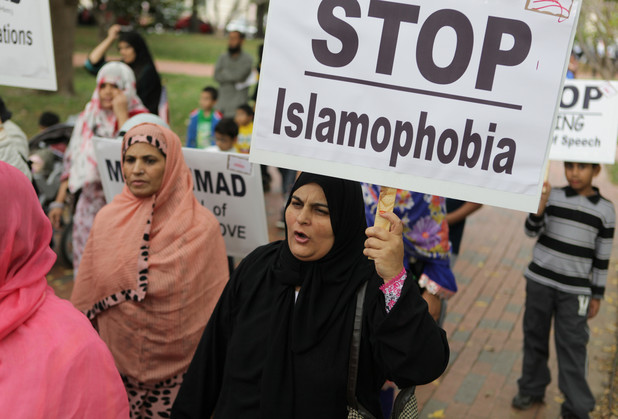
stop-islamophobia

This last week two things coincided: I attended a panel discussion on islamophobia and my facebook friends reacted to the news of Keith Scott being shot by a police officer. These might seem unrelated, but the more I thought about it, the more I realized that these experiences were really about the exact same thing: the human capacity to form narratives and hold on to them. Let’s start with the panel.

Three professors took turns speaking. Their point was that the narrative people have developed about Arabs and Islam is not accurate. People fear Arabs because they’re Muslim. But this is often not the case. There are a lot of Christians, Sikhs, and even agnostic Arabs. And people fear Muslims because of all the terrorist attacks. However, you are much more likely to be killed by lightning than by an Islamic extremist. According to one of the lecturers, Islamic extremism has only killed 109 Americans since September 11th 2001. That might sound like a lot, and every life is precious, but if you run the numbers, there is an infinitesimally small chance that you’ll be one of them. More people die falling out of bed. A lot more: it kills 737 Americans annually. Continue reading

Against Chronological Snobbery: The Lightweight Modern Values of Equality, Tolerance, and Diversity

Question the Answers by walknboston, on Flickr
Photo credit: https://www.flickr.com/photos/walkn/3526522573/

In my last “Against Chronological Snobbery” essay I introduced the debate between the “progressive” view of American history (that America’s history has been one of clear moral progress) and the “non-progressive” view (that it hasn’t—i.e., that the question is at least subject to debate). I endorsed the latter position. Representing the “progressive view” was Justice Kennedy’s Obergefell opinion, together with Justice Marshall’s assertion that the founders lacked any remarkable degree of wisdom, and that the greatness of the Constitution is its more recent embrace of equality and individual rights. Representing the “non-progressive” view was Justice Robert’s dissent in Obergefell and Justice Scalia’s dissent in U.S. v. Virginia, both of which included a scathing rebuke of the majorities’ chronological snobbery.

In this essay, I hope to continue my attack on the “progressive” view by assaulting one of its citadels—the self-satisfaction of contemporary mainstream culture with regard to its own value system.

Continue reading

Freedom to force the artist’s hand

***Adam Balinski is a guest contributor and a friend of Brian’s from BYU Law School. This article was first posted on his blog, rethbo.org. Please visit his blog for more respectful, insightful commentary.***

Some people have jumped on what I think is an incoherent bandwagon that creates crazy consumer rights.

450px-Colorful_three_tiered_wedding_cake_LCP
An uncontroversial wedding cake that the baker could’ve declined to decorate for dislike of flowers or the color pink. photo by tracyhunter

Under federal law, public accommodations are places where consumers go to receive a service. Consumers can’t be kept out of or denied services at public accommodations because of their sex or other protected attributes. (It’s true that under many anti-discrimination laws, sexual orientation is not a protected attribute. But it should be. It’s fair to allow people to go and buy regardless of how they self-identify.) Continue reading

How Romance Taught Me Religion

Wedding_rings

Romance:

Before we were married and while we were still in the midst of determining if we were truly compatible, my girlfriend (now wife) and I came to that brink that all relationships eventually arrive at–when you have progressed as far as you can without either taking the next step together or drifting apart. For us, that next step was marriage. Was she the one? Would our love and happiness last a lifetime? Did we really love each other enough to get married? Was there someone else out there that would be more compatible with me? Continue reading

Thomas More, Martyr of Traditional Marriage: Part One—His Greatness and His Values

After watching BYU’s production of “A Man for All Seasons,” a play about Thomas More, I was so inspired that I ordered Peter Ackroyd’s biography of the man. I finally finished it this summer, having worked my slow way through it mostly on Sunday afternoons during the last two years. (Law school has left little time for extra reading.) Although the play “A Man for All Seasons” portrays him, in some ways, more heroically than he deserves, I find that the true facts of his life and death are altogether more inspiring than the play—though I strongly recommend both. (And by the way, the play has been made into an excellent movie of the same title that won six academy awards in 1966, including best picture. Go watch it.) This first essay will be primarily an encomium on Thomas More, though I will depart far enough from my subject to contrast his values with the predominant moral sensibility of our day. In part two, I hope to compare the moral shift that society underwent in More’s day with the shift that has taken place in ours. I have made no secret of the fact that I am opposed to gay “marriage,” and this is part (but only part) of what motivates me to write—for More was, so far as I am aware, the first martyr who can be said to have died, in part, for traditional marriage. Continue reading