The Inconvenience of Belief

swan 3

Increasingly religious beliefs are being classified as self-deception or a means to justify prejudice. Not too long ago, a couple who had chosen to wait until marriage would have been respected even by those who did not share the religious conviction. But if you had the opportunity to listen to some of the professors at NC State talk about it, you would quickly realize that they believe anyone who advocates for abstinence until marriage must be misinformed, ignorant, or oppressed. In the minds of modern skeptics, religious conviction lacks the necessary conditions from which belief is justifiably built.

From their perspective, adequate proof must exist prior to belief and beliefs must always exist in proportion to the evidence. Religious belief in their minds does not fit this criteria. Instead, religious belief requires no experimentation, changes from person to person, and is made up by the imaginations of people who are picking out what things they’d want to be true. It is like children who play house with none of the inconvenience of actually collecting an income, paying taxes, or mowing the lawn.

And so it is no wonder that skeptics who see religious belief in this way would look upon it with some, if not a great deal, of disdain. Of course, they are right that religious belief is a very different thing from what I most commonly hear called “scientific belief.” But they get two things wrong by categorizing belief in this way. Continue reading
Trump’s Mormon (Tabernacle Choir) Problem

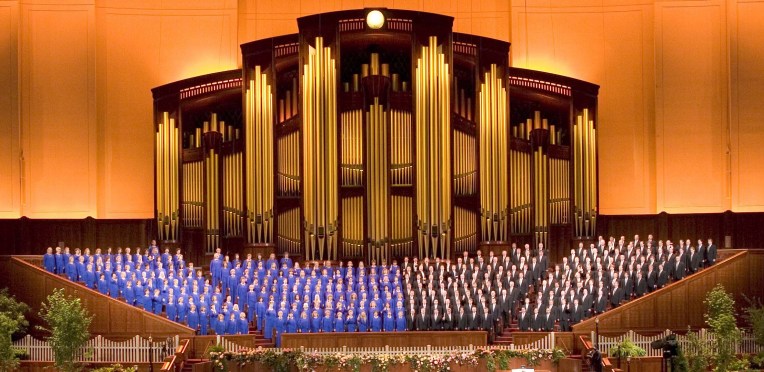
Mormon Tabernacle Choir

It is no secret that Trump has a Mormon problem (see this NY Times article and this Washington Post article, for example). During the troubled campaign, the LDS Church released a statement implicitly responding to (and opposing) Trump’s proposed ban on Muslim immigration, and church-owned Deseret News published an editorial condemning Trump’s misogynistic behavior and rhetoric, calling him to withdraw from the race–something all the more notable because the newspaper had not taken sides politically for 80 years. And although Trump ultimately won Utah, Mormons (in Utah and elsewhere) opposed Trump’s presidency more than any other traditionally conservative religious group. Yesterday, it was announced that the Mormon Tabernacle Choir would be performing at Trump’s election. Continue reading

The Stupidity of Belief Against Evidence And The Essence of Faithfulness

Thence we came forth to rebehold the stars.  {my favourite Dante quote.}:

Photo credit: https://www.pinterest.com/pin/129478558011794613/, “Thence we came forth to rebehold the stars.”

There is a facile enthusiasm about “believing” that is manifest every Christmas season and often enough in-between. Sentimental movies like “The Polar Express” and “The Miracle on 34th Street” chime in with their paeans to believing, and even works like “The Life of Pi” suggest that it is proper and even admirable to accept as true “the better story” even when it is the unlikeliest story imaginable.

At the front end, let me admit that there is a kernel of truth in these expressions. But there is also great danger is assuming that optimism can or should trump reason, and that belief in the truth of whatever appears good or lovely is itself necessarily good.

At least in questions where the relevant evidence is capable of being comprehensively considered, the proper formula is very simple: belief should be according to the evidence. Continue reading

Jane the Virgin and A Case for Guilt

635992720114068681-2108137969_18278


The third season of Jane the Virgin starts on Monday. I just complete the first two seasons (though I may have skipped a few, okay maybe like ten, episodes). And I have to admit, I enjoyed myself, though I have some serious reservations.

According to critical consensus at Rotten Tomatoes, the show manages to be charming despite its  “dubious premise.” Here’s the premise: a girl has agreed to practice abstinence until marriage but then a whole bunch of drama happens after she is accidentally artificially inseminated. So what’s so dubious about this premise? It risks becoming sanctimonious. People don’t want to watch a show that even hints at religious dogmatism. Continue reading

The Accidental Christianity of Hollywood

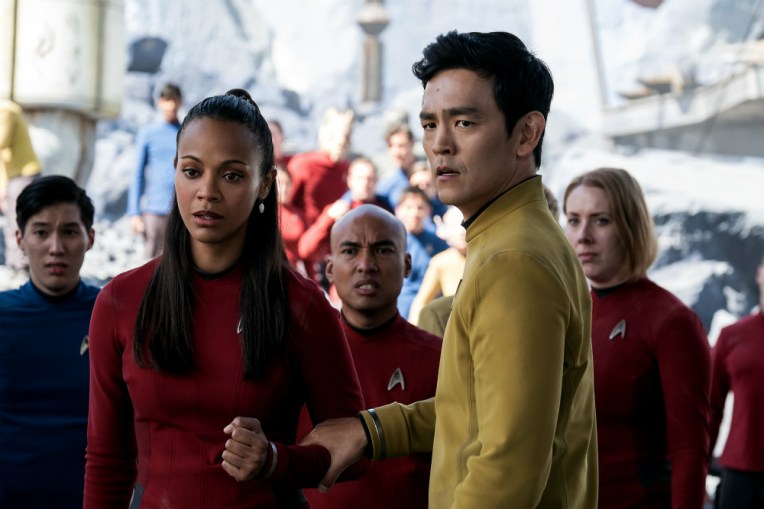
star-trek-beyond-zoe-saldana-john-cho.jpg

I’m watching Star Trek Beyond and Krall just threatened to kill Sulu in order to coerce the crew into giving him the Abronath (a bioweapon capable of huge destruction). But rather than letting a crew member die, an Ensign named Syl turns over the weapon from its hiding place in the back of her head. It’s a very familiar scene. You find similar scenes in Star Wars, most of the superhero films, and even children movies like Disney’s Hercules. Remember when Hercules gives up his power to save Meg and thus allows Hades to terrorize the city and even assault Mount Olympus?

My complaint is not that this trope has become repetitive (here’s a long list of similar scenes), but that we simply accept it as a legitimate ethical decision. Do we agree that it is appropriate to surrender thousands, millions, possibly billions of lives (the stakes keep getting higher) in order to save Sulu? Why does this ever make sense? Spaceballs even parodies this trope when The King sacrifices himself and the entire population of his home planet just so the princess doesn’t get her old nose back. When it’s a nose, we understand the absurdity, but that absurdity is harder to recognize when someone’s life is at stake. Continue reading

Single Narratives About Terrorist Attacks And Police Shootings

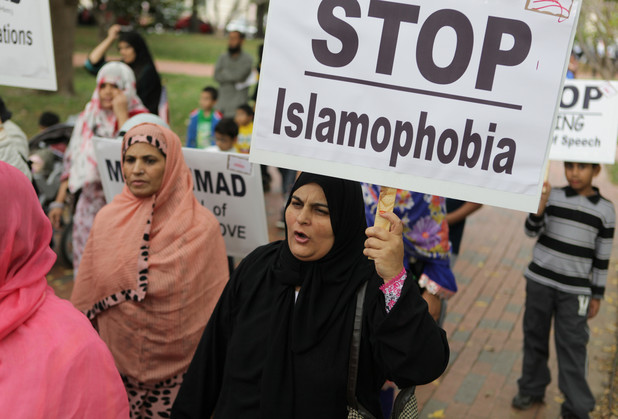
stop-islamophobia

This last week two things coincided: I attended a panel discussion on islamophobia and my facebook friends reacted to the news of Keith Scott being shot by a police officer. These might seem unrelated, but the more I thought about it, the more I realized that these experiences were really about the exact same thing: the human capacity to form narratives and hold on to them. Let’s start with the panel.

Three professors took turns speaking. Their point was that the narrative people have developed about Arabs and Islam is not accurate. People fear Arabs because they’re Muslim. But this is often not the case. There are a lot of Christians, Sikhs, and even agnostic Arabs. And people fear Muslims because of all the terrorist attacks. However, you are much more likely to be killed by lightning than by an Islamic extremist. According to one of the lecturers, Islamic extremism has only killed 109 Americans since September 11th 2001. That might sound like a lot, and every life is precious, but if you run the numbers, there is an infinitesimally small chance that you’ll be one of them. More people die falling out of bed. A lot more: it kills 737 Americans annually. Continue reading