What Westerners can learn from Eastern philosophy: Filial Piety.

Americans often look down on other cultures, such as middle-eastern cultures that force women to wear something over their hair and/or face while in public. We think it is demeaning to women. It certainly seems a little demeaning to me. I couldn’t dream of that being enforced as a law in America. But have you ever wondered, what American’s do that other cultures think is just wrong? What about us makes them cringe?

During my time in Taiwan I taught regular English classes. Once when I was teaching English class, we were discussing Chinese and American culture. I learned that to the Taiwanese, one of the most abhorrent things we accept in our culture is the prevalence of nursing homes. It makes them sick to think about it. You may think this funny, but listen to my limited understanding of their reasoning. Your parents gave you life, they feed you for years and gave the best of themselves to you. When they get old, how could you in return, send them away from their home, away from friends, and away from you, to a place where those who take care of them don’t do it for love, but for money? In Confucian influenced cultures there is a deep belief in filial piety, meaning  respect for one’s parents, elders, and ancestors. Due to this belief, grandparents often live in their children’s homes and are taken care of by their own children as they age. So that is the norm in China. Continue reading
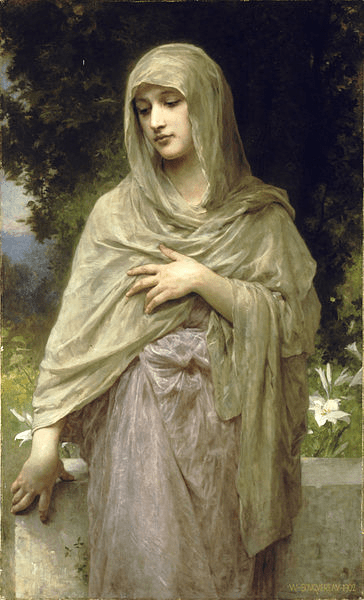

In Defense of Modesty

Modesty, Oil by William Adolphe Bouguereau

Modesty, like reverence, is becoming a forgotten virtue. Calls for modesty in dress in ultra-orthodox jewish neighborhoods are perceived by some as a violation of human rights. Others, less extreme, view codes of modest dress as stifling individual expression or as shifting responsibility for men’s sexuality from the men themselves to women. Now, it may or may not be a good idea to post signs in the hasidic neighborhoods. And codes of modest dress may indeed be misinterpreted by men as absolving them of responsibility for their own sexual behavior. But regardless, modesty is still a virtue–and one that deserves to be encouraged and inculcated.

We use the term “modesty” in the context of dress and in the context of personal achievement, but the core of the idea is the same Continue reading

The Delusions and the Truth of Romance

Image result for soulmate
photo credit: http://www.powerofpositivity.com/soulmate-relationship-signs/

Too many people seek lasting happiness and fulfillment in romantic love, where it is not to be found.

What romantic love offers is agitation, desire, a fevered preoccupation with the object of love, the blithe contemplation of an other. There is beauty and there is truth to be found in romantic love, but no lasting happiness or fulfillment. That “happily ever after” is to be found in romantic love is the first of its delusions.

Yet there is something undeniably beautiful about two souls waltzing in a private heaven, loving and being loved. But one falls when one waltzes in heaven. Romance either lands on the earth of daily life or it combusts in tragedy. By the “earth of daily life” I mean mainly marriage or the modern forms of pseudo-marriage. The only realistic alternative to these is some form of tragedy–breaking up or dying or in some other way being separated. These melancholy obstacles to consummation are the only way to prevent romance from descending into the soil. And that is why romantic novels and movies inevitably end shortly after consummation (traditionally, marriage). The last scene may be the wedding; or the story may play out just long enough to witness the tragic pre- or post-consummation death of one or both lovers (as, e.g., Tristan and Isolde or Romeo and Juliet). Continue reading

The Stupidity of Belief Against Evidence And The Essence of Faithfulness

Thence we came forth to rebehold the stars.  {my favourite Dante quote.}:

Photo credit: https://www.pinterest.com/pin/129478558011794613/, “Thence we came forth to rebehold the stars.”

There is a facile enthusiasm about “believing” that is manifest every Christmas season and often enough in-between. Sentimental movies like “The Polar Express” and “The Miracle on 34th Street” chime in with their paeans to believing, and even works like “The Life of Pi” suggest that it is proper and even admirable to accept as true “the better story” even when it is the unlikeliest story imaginable.

At the front end, let me admit that there is a kernel of truth in these expressions. But there is also great danger is assuming that optimism can or should trump reason, and that belief in the truth of whatever appears good or lovely is itself necessarily good.

At least in questions where the relevant evidence is capable of being comprehensively considered, the proper formula is very simple: belief should be according to the evidence. Continue reading

To my one-year-old daughter: Thoughts on Body Image and Beauty

11960092_4308339073677_2314436844244038233_nMy daughter, you are no longer a baby. This is impossible to me. You are more than a year old right now and I marvel at how big you’re getting. You were trying to stand in an ice cream bucket the other day—giggling as it fell over again and again—an ice cream bucket that we could bathe you in when you were just born. Your growing feet and toes are the foundation for the past miracles of standing and your first, tottering steps—and now for running, jumping, climbing the stairs at the playground outside, and the endless enjoyment as we play “this little piggy” while you sit (and sit, and sit, and waaait) on the potty. Your increased size is paralleled by increased ability and comprehension. Dad and I are amazed every time you show some new understanding: a new sign, a new animal sound, a new mimicry. The other day I told you in pre-dinner end-of-day frustration, “I’m tired, too, but soon Daddy will be home and then we can bug HIM.” You looked at me seriously… and then signed “bug” (as in insect).

I’ve experienced the double blessing of watching myself grow next to you. People joke, “She’s getting so big! And so is Alsina!” Oh ha ha. I’m eight months plus two weeks pregnant, and things have definitely changed dramatically. Moving my bulk around is a huge commitment, and sometimes I wake up at two am half off the bed—having, apparently, decided halfway that it wasn’t worth the effort of getting all the way up to go to the bathroom. It’s not just a big belly added on to the front of my normal frame, either: I can’t even get pre-pregnancy pants up around my ankles, much less my now-herculean thighs, and pre-pregnancy blouses have the same issue around burgeoning… other places.

Why does “getting big” suddenly become a curse as we grow older? Continue reading