History and Import of Religious Liberty: The Shift to “Thin” Societies, Part One of Three

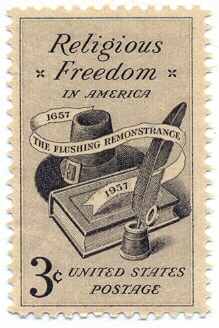
This is the first in a series of essays in which I hope to examine the history of American religious liberty—in particular, the backstory, interpretations, and shifting moral valence  of the Establishment and Free Exercise Clauses of the Constitution.

“The past is never dead. It’s not even past.”[1] The immediate historical backstory against which the Establishment Clause is set is the institution of the European state churches that impelled many colonists to leave Europe in pursuit of religious freedom. Most historical accounts of the Establishment Clause begin and end here. But the background of European state churches is the Peace of Westphalia, the religio-political wars that preceded it, and the Reformation.[2]  Some historical accounts reach this far back. But to thoroughly understand the significance of the Establishment Clause I think we need to reach further—all the way back to pre-history. Continue reading

Meaning versus Desire: A Theory and Critique of Contemporary Sexuality

Where Do We Come From? What Are We? Where Are We Going” by Paul Gauguin

Today, there are two main economies of sexuality. By “economy,” I mean a complex and dynamic system that centers on some “currency” that the members of the economy seek–something that can be intentionally given, taken, and sought. Economies transform themselves, depending on what is sought and how: the economy “grows,” “shrinks,” or “moves” to a different currency. Economies exist in nature as well as in human society–water economies, economies of reproduction, economies of light: pick your resource.

The currency of one of the economies of sexuality is desire; the currency of the other is meaning. Continue reading

Against Chronological Snobbery: The Lightweight Modern Values of Equality, Tolerance, and Diversity

Question the Answers by walknboston, on Flickr
Photo credit: https://www.flickr.com/photos/walkn/3526522573/

In my last “Against Chronological Snobbery” essay I introduced the debate between the “progressive” view of American history (that America’s history has been one of clear moral progress) and the “non-progressive” view (that it hasn’t—i.e., that the question is at least subject to debate). I endorsed the latter position. Representing the “progressive view” was Justice Kennedy’s Obergefell opinion, together with Justice Marshall’s assertion that the founders lacked any remarkable degree of wisdom, and that the greatness of the Constitution is its more recent embrace of equality and individual rights. Representing the “non-progressive” view was Justice Robert’s dissent in Obergefell and Justice Scalia’s dissent in U.S. v. Virginia, both of which included a scathing rebuke of the majorities’ chronological snobbery.

In this essay, I hope to continue my attack on the “progressive” view by assaulting one of its citadels—the self-satisfaction of contemporary mainstream culture with regard to its own value system.

Continue reading

In Praise of Fatherhood

Today I honor the beauty and grace of fatherhood. I am recently graduated from law school, and getting ready to start a job at my dad’s firm in August. Dia and I have very little money. Yet we have just made a down payment on our first house. I am studying for the bar exam in July and occasionally relieving Dia from the sole care of two girls under the age of two. We have very little time. Yet we have just returned from a ten-day Hawaii vacation.

The house was a little miracle. Continue reading

Against Chronological Snobbery: The Supreme Court

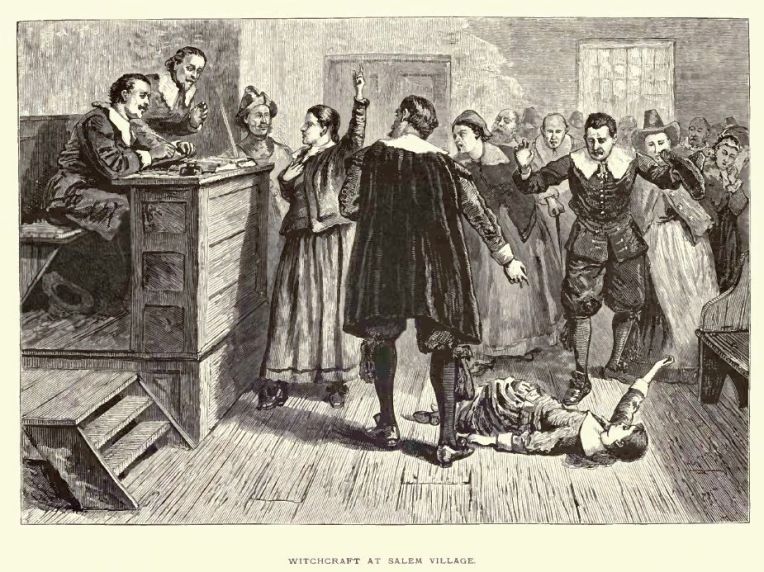
SalemWitchcraftTrial_large

This is the first in a series of posts intended to expose the snobbery that is often entailed by claims of the “progress” of culture. I hope to attack various manifestations of the view that currently popular moral, social, and philosophical views may safely be regarded as superior to those that were popular in past ages. Subsequent posts will deal with issues such as the alleged progress of our moral ideology, our philosophical understanding of the nature of things, and our ability as a culture of foster human thriving. But here I will attack chronological snobbery as it is found in the Supreme Court’s jurisprudence. Continue reading

Why You Shouldn’t “Be True to Yourself”

love yourself photo
https://www.flickr.com/photos/quinndombrowski/with/5712669523/

We live in an age obsessed with self-actualization, self-fulfillment, self-realization, self-discovery, self-knowledge, self-esteem, self-expression, self-help, self-image, self-identity, etc. Selfies, iPhones, YouTube, me time. We’re self-obsessed.

The idea of “being true to yourself” implies that there is a core-self at our centers to which we could, theoretically, be false. But I doubt that. Continue reading