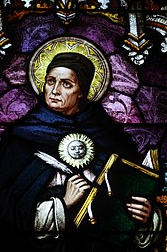
Against Systematic Theology

Tell all the truth but tell it slant —

Success in Circuit lies

Too bright for our infirm Delight

The Truth’s superb surprise

As Lightning to the Children eased

With explanation kind

The Truth must dazzle gradually

Or every man be blind —

-Emily Dickinson

I participate in a theology book club in which we are reading Exploring Mormon Thought, by Blake Osler. Osler is interesting in that he is doing systematic theology, but at the same time he questions the value of systematic theology, doubts its ability to attain its own goals, and admits the limitations of language and the necessity of experiential and relational knowledge in spiritual matters, in contrast to propositional beliefs.

I agree with his questions, doubts, and admissions. I appreciate his work and consider it worthy of our time and attention, but I could be just as good a Christian without once cracking a book of systematic theology.

Now I want to be clear that I am fully in favor of careful thought and intellectual rigor, of seeking greater and greater light and knowledge. Indeed, doing so is a spiritual necessity. If our light and knowledge is not growing, it is shrinking (see Alma 12). Far more than most brands of traditional Christianity, LDS thought enjoins intellectual effort as a duty: we are commanded to “seek out of the best books words of wisdom” and informed that we cannot be saved in ignorance. My target here is not intellectual effort or even theological carefulness, but solely systematic theology. Continue reading

A Modified Theory of the Atonement: God’s Response To The Human Condition

File:Edvard Munch - Golgotha (1900).jpg
Edvard Munch, “Golgotha”

Because we could not come to him or even be brought to him without horror, he came to us, in the form of Jesus Christ. There was never a time when God had not yet intervened in the human condition, so it is misleading to conceptualize the sending of his son as the beginning of God’s response. But Jesus Christ, from before the foundations of the earth, is the ultimate expression and the primary vehicle of God’s intervention. He is “the anointed one”–the “Christ” (in Greek) or “Messiah” (in Hebrew)–the one chosen to serve as this vehicle. As in all of the great hero stories, the hero comes prepared with the necessary assets for the monumental task that is set before him. Often the hero is told of some weakness of the enemy and given a predestined weapon, tempered for the conflict. The hero of God and man came armed, not with any sword of destiny, but with an intimate and unbreakable relationship with his Father. He spoke unceasingly of his Father–from his first recorded utterance (“Wist ye not that I must be about my Father’s business?”) to his dying breath (“Father, into thy hands I commend my spirit.”). Why did he have power to perform miracles? Because his Father showed him how and gave him power. “Verily, verily, I say unto you, The Son can do nothing of himself, but what he seeth the Father do” (John 5:19). “All things are delivered unto me of my Father” (Matt 11:27). “The Father loveth the Son, and hath given all things into his hand” (John 3:35).

Continue reading