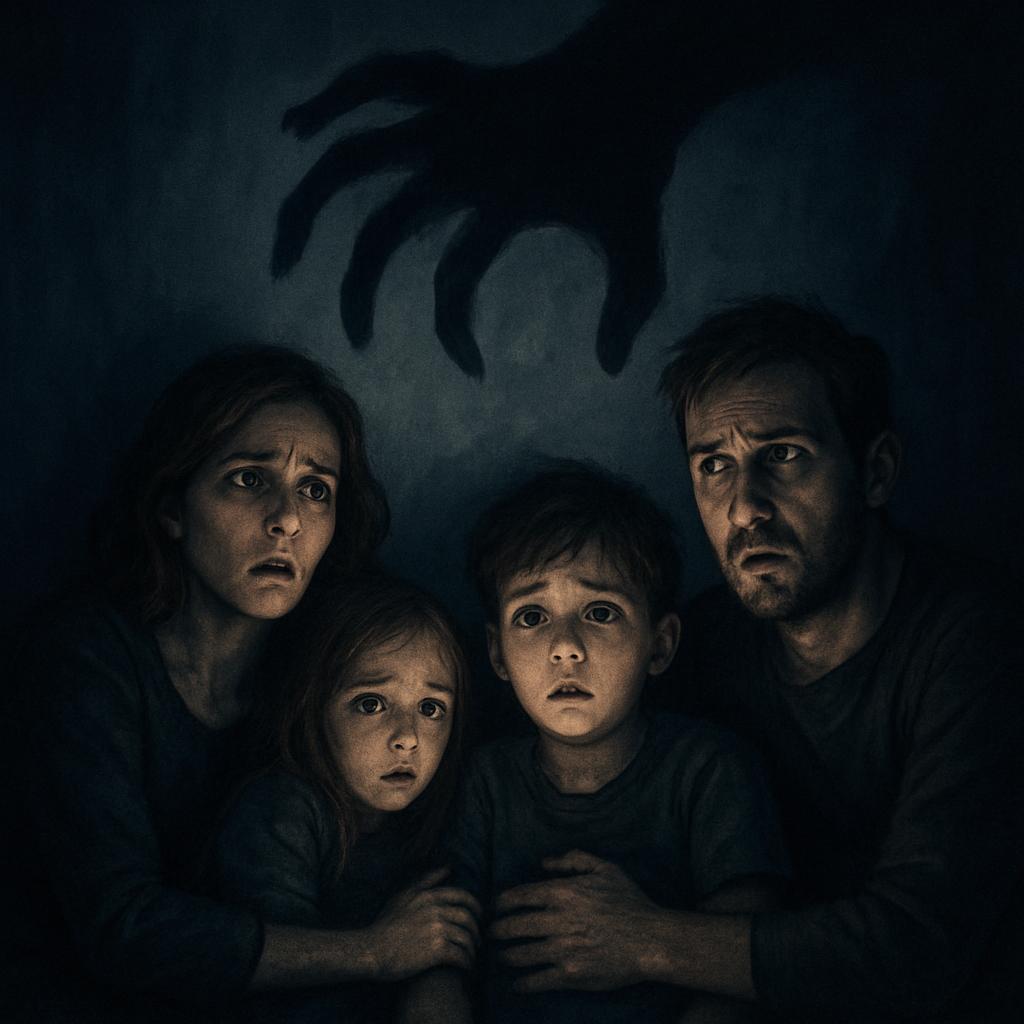
The Government Should Stop Criminalizing Honest Parenting Mistakes

On May 27, 2025, Judge Vance dismissed criminal charges against me and closed the case on my criminal negligence child abuse prosecution. My crime? Failing to notice that my toddler, Miriam, had snuck away from the van while I was buckling in the crying baby, inadvertently leaving the toddler at the park, and driving home (at which point I noticed she was not present). She was absent from me for roughly 20 minutes before I had rushed back to the scene. By then, two well-meaning women had found her crying at the roadside and called 911. 

Continue reading

What is Revelation Anyway?

pxfuel.com

Many of the tensions among members of the Church of Jesus Christ of Latter-day Saints, and between members and those that do not (or no longer) affiliate with the Church seem to boil down to different understandings of revelation. For example, questions about anachronisms in the Book of Mormon or the early Church’s practice of polygamy are fundamentally questions about the nature of revelation, the authenticity of purported revelations, and one’s obligations to those who claim the titles “prophet, seer, and revelator.” These questions have been simmering since the First Vision, flaring up from time to time in response to any number of issues, including, for example, the recent policy change regarding children of same-sex couples (i.e., How can you argue that both the original policy and its retraction are revelations or the result of revelation?). Continue reading

We are Losing Precious Members

brown-wooden-church-bench-near-white-painted-wall-133699

People are leaving my church. Good people. People I know. People I like. In response to this modern exodus, I have heard three explanations from within my church community. The first two are rationalization narratives. They attempt to put the community at ease. First, there is the narrative that we are destined to be a small group of believers. The Bible never suggests “the believers” are going to be popular. In the Book of Mormon, Nephi has a vision of the modern-day church and he notes that “its numbers [are] few.” And so declining membership actually seems in line with revelation. Believers are supposed to be a small, peculiar group of persecuted faithful. This is problematic. Continue reading

Suffering Grace: in defense of a benevolent God

catholic-celestial-christ-37737Those who argue against the existence of a benevolent Christian deity will often site as a centerpiece of their belief the inexplicability of suffering in the world. This happened again recently in the New York Times. While there is some suffering caused by other people which can be explained by an appeal to human agency, there is also suffering (perhaps a far greater amount of suffering) caused by mindless, lifeless, natural forces. Hurricanes, volcanoes, tornadoes, tsunamis, famine, pestilence. Millions of people, in pain, just for living on the earth. These forces, they will say, since they cannot be assigned another agency, must be assigned to God, if there really is one.

To secure their position, they might add, while the devil could be a convenient scapegoat, what are we to do when a hurricane has brought rain to a farmer but killed another woman’s child? The farmer kneels in the darkened soil thanking God in the same moment the anguished woman stands at the end of the pier cursing the devil. We cannot say in one instance it is an act of the devil and in another it is the act of God. It must be one or the other. Continue reading

Miracle

mary magdalen at the tomb of our saviour

In the Gospel of Matthew the often repeated words, “he is risen” are preceded by the statement, “he is not here.” Then as evidence of the risen Lord, the angel invites Mary to see the absence of the Lord’s body from the tomb. But the missing body only highlights the questions already burning in her heart. The very questions which caused her arrival in the garden tomb in the first place: where did he go and where is he now?

As is often the case with Christ’s miracles, the supernatural aspect underscore the common reality: people die. And while the body is usually left behind, we are left to wonder how it could be so entirely abandoned. How an object which had once been a man has ceased to present a human being. How the formaldehyde fails to preserve key aspects, even physical aspects, of the person we knew. And it is by this common, natural reality—the incongruity of death—that Christ’s missing body moves us, and not the other way around. The loss of a friend, a father, a lover, a son. Touching a corpse, holding an embalmed hand, kissing a dead man’s lips, nothing more profound than these are required for us to have asked the question: Where did she go? Where is he now? Continue reading

The uncharacteristic honesty of psychology concerning reparative therapy

therapy session

On September 14, 2015 a team of professors published a paper. The paper came out after a series of exposés revealed a general unreliability in the “science of psychology.” There were a number of high-profile replication failures, a few fraud cases, and questionable research practices. People were beginning to ask whether or not psychological research and conclusions could be trusted. The team observed that the field of psychology was almost entirely liberal and that the lack of political diversity was actually leading to a lack in scientific accuracy.

The scientists who published the paper were well known and respected, many of them holding liberal sentiments themselves. Yet they believed they could show how the lack of ideological diversity was interfering with the research. And what’s more, this interference was creeping into other fields as well. The result of this creep, they worried, would not only be less reliable research but, perhaps worst of all, a lack of respect, trust, and funding for future research. Their fears are being realized as funding for the social sciences is increasingly under threat from conservatives in congress as well as the National Science Foundation—which proposed cutting its own social science budget by 11% this year. Political discussions are less and less grounded in agreed upon facts because studies can be quickly dismissed as politically motivated, which is sadly often the case.

What these scientists hoped to show is that the field of psychology has some culpability in the current state of affairs. To restore the faith of the masses, they believed psychology would need to work much harder to avoid political entanglements, to stifle ideological homogeneity, and Continue reading