Against Chronological Snobbery: The Supreme Court

SalemWitchcraftTrial_large

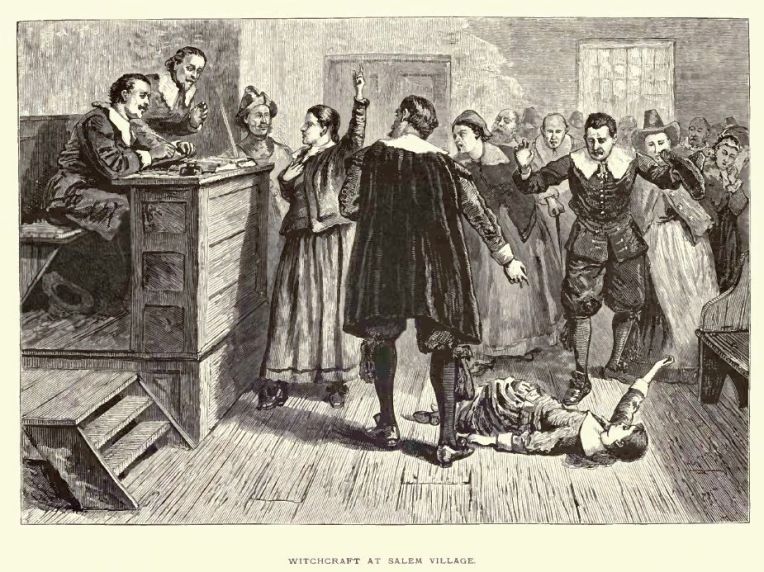
This is the first in a series of posts intended to expose the snobbery that is often entailed by claims of the “progress” of culture. I hope to attack various manifestations of the view that currently popular moral, social, and philosophical views may safely be regarded as superior to those that were popular in past ages. Subsequent posts will deal with issues such as the alleged progress of our moral ideology, our philosophical understanding of the nature of things, and our ability as a culture of foster human thriving. But here I will attack chronological snobbery as it is found in the Supreme Court’s jurisprudence. Continue reading

Obamacare is just another lottery

lab

ELSIE is a woman who works three jobs, one at a law firm organizing documents, one at Coors Field taking tickets, and one at Sam’s club where she gives out more samples than any of the other employees. She’s got a loud southern voice with the slow, soft cadence of a natural storyteller. The last time she bought a lottery ticket was a month ago when the Power Ball reached a record high of 1.5 billion. She used to play once a week, but she was never up late enough to see the winning numbers on TV and so in the morning she would collect the paper from her porch and diligently ruffle through to see if she had won. She did win once, 40 dollars. And almost 200 another time, but her friend who she had sent to purchase the ticket with her lucky numbers never actually did. “If I had won the million, I could have killed him and no judge would condemn me,” she says dryly. “We laughed about it, that’s all.”

Buying a ticket has become a ritual of hope, like a prayer. “It’s nice to imagine,” she says. She thinks of who she would help if she got the money. She wouldn’t move, or change much about her own life. She plays because she likes to imagine giving it all away, all but a little for retirement. She would give some to her nieces and nephews, her co-workers, and she even said she would give some to me. Talking about it for a few minutes with me was enough to brighten her hopes, and she told me, as we were saying goodbye, “you know, I’m going to buy a ticket tomorrow.” Continue reading

North Carolina’s HB2 won’t work

Pearl-Jam

North Carolina recently published HB2, a law known as the bathroom law. The reaction has been huge with states and companies starting boycotts. And this morning, Pearl Jam joined the long list of entertainers who have canceled their trip to Raleigh. In short, the law states that people must go to the bathroom of their biological sex rather than gender identity.  The law allows (and encourages) a third bathroom model for people who don’t fit into the traditional genders. This three bathroom model is used in the San Diego airport (not a very conservative place) and so is perhaps not quite as reactionary as it is portrayed. Continue reading

In Memoriam: A Plea for a Different Discourse

tug of war

I recently learned of the passing of Steven H. Webb, a relatively obscure theologian who taught at Wabash college. Although he had a successful academic career, you probably would not have heard of him unless you have an academic interest in Karl Barth and the metaphysics of matter, or happened to attend one of his lectures or stumble upon his writing. For me, it was the latter. I don’t know how exactly I discovered his book Mormon Christianity: What Other Christians Can Learn from Latter-Day Saints, but I devoured it upon  discovery. The acknowledgements begin with the phrase, “Studying Mormonism has made me a better Christian,” and Chapter 1 starts with, “I am not a Mormon, but sometimes I wish I were one.”

I actually cried as I read Webb’s examination of my religion simply because it was kind. (It was also insightful and informed, but the kindness is what set it apart.) I had grown so accustomed to reading commentary on Mormonism that I found short-sighted, biased, condescending, and demeaning, that this open-armed and nuanced discussion felt like the first warm day after a long winter. I didn’t even realize that I had been figuratively clenching my teeth, and tensing my shoulder and neck muscles against the cold until I sensed that it was no longer needed; I relaxed into the warmth of Webb’s writing. Although we never met, I mourn with his loved ones for his death. I did not feel comfortable writing my condolences in the online guestbook alongside those who actually knew him, but I wanted to honor him for the grace he showed me through his kind and thoughtful dealings with my community of faith. Continue reading

Demonizing trump supporters won’t help anyone

p506761223-5
On March 4th, just months before the end of the Civil war, Lincoln delivered his second inaugural address and we see that his mind had turned towards reconstruction and reconciliation. He concludes:

With malice toward none, with charity for all, with firmness in the right as God gives us to see the right, let us strive on to finish the work we are in, to bind up the nation’s wounds, to care for him who shall have borne the battle and for his widow and his orphan, to do all which may achieve and cherish a just and lasting peace among ourselves and with all nations.

These are words we might turn to again as the wild success of Donald Trump exposes a large population of people who have a lot in common with Southerners after the civil war. Continue reading

Politics: why rudeness wins

Loss of Civil Discourse

As I think about tonight’s presidential debate, I bemoan the loss of civil discourse—though my imaginary age of civility may be romanticized a bit. It is, however, true that over the last fifty years we have become more polarized. But it is also true that in the 1840s and 1850s “partisanship was so extreme congressmen took guns to the House of Representatives to protect themselves.” Continue reading