In Defense of Dogmatism

Amazon’s “look inside” feature has preserved intact a perfect little essay from the book, “Things That Are,” by Amy Leach. I have met Amy Leach–I even hiked in Provo’s beautiful Rock Canyon with her, her husband, and my personal essay class, courtesy of Patrick McMadden, my essay teacher, who I think was involved in getting her to come out to BYU and read from her book during BYU’s Friday Reading Series. If you will follow the above link, use the “look inside” feature, and search the word “hoopoe,” you will find a complete, lovely, and very short essay titled “God.”

In this essay, Amy Leach points out that men take the name of God in their mouths, but they do not speak God’s words. “They say it pleases him, to say his name incessantly. They sing it in songs and chant it together and broadcast it loudly on the radio, on signs. Perhaps it pleases him. I do not know. It does not please me.”

These iterations of his name are totally different from his words. God’s words, according to this essay, are his creatures, who “mount up with wings or leap through brambles or swim blackly in ponds.”

I find this essay utterly charming, like the rest of the book, but I also find something lacking in the treatment of how men speak God’s name. Continue reading
Reconciling Religion and Politics in Post-Obama America

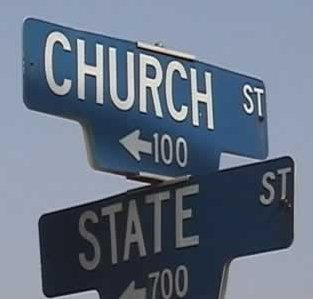
church and state

Hakim’s car smelled faintly of cigarette smoke, but it was clean and he greeted me warmly. Hakim was an African-American man with a raspy voice and a slight southern accent. This was my first experience riding Lyft, and it was a pleasant one. He asked me about my work and told me about his—he recently retired as a parole officer, and drives for Lyft on the weekends. Our conversation eventually turned to politics. I didn’t know what to expect. In the wake of an election that had been described as a “whitelash,” I wanted to tread carefully. I tried to say things that would assure Hakim that I understood something about the racial tensions that were unsurfaced and aggravated during and in response to the election. I wanted him to know that I appreciated President Obama and that I had not supported Trump’s candidacy. I was surprised when he said, “You know, I had a real hard time with this election. I actually voted Republican in the last two. Just couldn’t bring myself to vote for Obama. Religious reasons, you know? I had the same problem with Hillary. But Trump?” The way he said “Trump,” sliding into a raspy falsetto, made me laugh. That and my surprise: a middle-aged, middle-class African-American man voting for McCain and Romney rather than Obama, due to religiously-motivated objections (to gay marriage and abortion, as it turned out). Serendipitously, perhaps, our destination was a church. As I got out, he said, “God bless, my friend.”

I know that people of color are not monolithic, just as I recognize that many are forced to uncomfortable compromises when voting, trying to participate within a system that has often explicitly discouraged their participation, voting for what seems to be the lesser of two evils and the least likely to provoke direct harm to them and their loved ones. It is very likely that Hakim is not consistently conservative. But in a defining moment of American politics, he voted Republican. I’ve often wondered which candidate he voted for in 2016.  He never told me, but apparently it wasn’t a particularly straightforward question for him. Continue reading