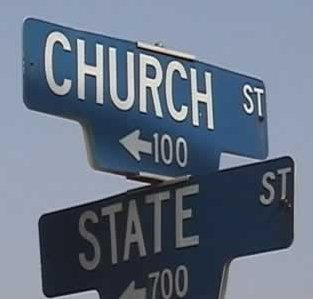
The Culture War: Why Sexual Whateverism Hurts Me As Much And In The Same Way As Traditional Sexual Morality Hurts Them

I am perfectly comfortable with being thought wrong by those who think gay marriage a huge moral victory. But they do not seem to be OK with me thinking them wrong. Why is this?

There is a serious imbalance in the way our culture views its own culture wars. Those who promotes traditional sexual morality, including the prohibition against sexual relations outside of dual-gendered marriage, are criticized for promoting ideologies that are hurtful and insensitive towards LGBT and other non-conforming persons. Those who promote the “new sexual morality” (really more of a sexual amorality) are praised for granting those who were previously considered sexual deviants the respect they deserve.

So far so good. I have no problem with the proponent of traditional morality being criticized in this way. I have no problem with the proponent of the new [a]morality being praised in this way either. My problem–and the “serious imbalance” to which I referred–is that I have never heard anybody criticize the proponent of the new morality for promoting an ideology that is hurtful and insensitive towards the nonconforming tradition, and I have never heard anybody praise the proponent of traditional morality for granting tradition and its proponents the respect they deserve. Continue reading

In Defense of Dogmatism

Amazon’s “look inside” feature has preserved intact a perfect little essay from the book, “Things That Are,” by Amy Leach. I have met Amy Leach–I even hiked in Provo’s beautiful Rock Canyon with her, her husband, and my personal essay class, courtesy of Patrick McMadden, my essay teacher, who I think was involved in getting her to come out to BYU and read from her book during BYU’s Friday Reading Series. If you will follow the above link, use the “look inside” feature, and search the word “hoopoe,” you will find a complete, lovely, and very short essay titled “God.”

In this essay, Amy Leach points out that men take the name of God in their mouths, but they do not speak God’s words. “They say it pleases him, to say his name incessantly. They sing it in songs and chant it together and broadcast it loudly on the radio, on signs. Perhaps it pleases him. I do not know. It does not please me.”

These iterations of his name are totally different from his words. God’s words, according to this essay, are his creatures, who “mount up with wings or leap through brambles or swim blackly in ponds.”

I find this essay utterly charming, like the rest of the book, but I also find something lacking in the treatment of how men speak God’s name. Continue reading

Millennials and the Millennium

strength-strong-toy-action-figure

As millennials continue to be dissatisfied with religion, leaving churches in greater numbers every year, I have become at times defensive. I’ve wanted to defend my own religious convictions as well as point out how Christianity has colored, beautified, and created the world we’ve inherited. So even if we turn a blind eye to Christianity, we can never really leave it, nor should we want to.

In my experience, the most cited reason my generation offers for their exodus is “hypocrisy.” If a religion that teaches moral principles doesn’t create morally principled people, what good is it? To them, what religion preaches correctly it administers poorly, such as kindness, love, and generosity. And what it believes incorrectly it administers effectively, beliefs around Proposition 8 and most recently the election of Donald Trump who was most fervently supported by white, evangelical men.

So what good is religion? Continue reading

My Dad Dreams of Flying: an essay on love

1915178_1284464678707_7619656_n

I grew up knowing that my Dad dreamed of flying. He didn’t have feathers or airplane wings in these dreams. He just lifted up like superman. In slow summer morning, we used to relish in our dreams. To me, the most exciting dreams included stormtroopers, lightsabers, Ewoks, and the rebel cause. As we sat with messy hair and no shirts, because we wore shorts instead of pajamas, we would bring vague recollection to dramatic conclusion in the telling of it. It was remembrance and invention at the same time.

Throughout my life, I have only dreamed of flying a few times, none of which I remember very well. But when I woke up I thought to myself, oh yes, I too have now dreamed of flying. It was something, in my mind, to be proud of. I don’t remember how I flew but when I imagine it now I have wings and there is joy simply in the performance of it.   Continue reading

The Delusions and the Truth of Romance

Image result for soulmate
photo credit: http://www.powerofpositivity.com/soulmate-relationship-signs/

Too many people seek lasting happiness and fulfillment in romantic love, where it is not to be found.

What romantic love offers is agitation, desire, a fevered preoccupation with the object of love, the blithe contemplation of an other. There is beauty and there is truth to be found in romantic love, but no lasting happiness or fulfillment. That “happily ever after” is to be found in romantic love is the first of its delusions.

Yet there is something undeniably beautiful about two souls waltzing in a private heaven, loving and being loved. But one falls when one waltzes in heaven. Romance either lands on the earth of daily life or it combusts in tragedy. By the “earth of daily life” I mean mainly marriage or the modern forms of pseudo-marriage. The only realistic alternative to these is some form of tragedy–breaking up or dying or in some other way being separated. These melancholy obstacles to consummation are the only way to prevent romance from descending into the soil. And that is why romantic novels and movies inevitably end shortly after consummation (traditionally, marriage). The last scene may be the wedding; or the story may play out just long enough to witness the tragic pre- or post-consummation death of one or both lovers (as, e.g., Tristan and Isolde or Romeo and Juliet). Continue reading

Reconciling Religion and Politics in Post-Obama America

church and state

Hakim’s car smelled faintly of cigarette smoke, but it was clean and he greeted me warmly. Hakim was an African-American man with a raspy voice and a slight southern accent. This was my first experience riding Lyft, and it was a pleasant one. He asked me about my work and told me about his—he recently retired as a parole officer, and drives for Lyft on the weekends. Our conversation eventually turned to politics. I didn’t know what to expect. In the wake of an election that had been described as a “whitelash,” I wanted to tread carefully. I tried to say things that would assure Hakim that I understood something about the racial tensions that were unsurfaced and aggravated during and in response to the election. I wanted him to know that I appreciated President Obama and that I had not supported Trump’s candidacy. I was surprised when he said, “You know, I had a real hard time with this election. I actually voted Republican in the last two. Just couldn’t bring myself to vote for Obama. Religious reasons, you know? I had the same problem with Hillary. But Trump?” The way he said “Trump,” sliding into a raspy falsetto, made me laugh. That and my surprise: a middle-aged, middle-class African-American man voting for McCain and Romney rather than Obama, due to religiously-motivated objections (to gay marriage and abortion, as it turned out). Serendipitously, perhaps, our destination was a church. As I got out, he said, “God bless, my friend.”

I know that people of color are not monolithic, just as I recognize that many are forced to uncomfortable compromises when voting, trying to participate within a system that has often explicitly discouraged their participation, voting for what seems to be the lesser of two evils and the least likely to provoke direct harm to them and their loved ones. It is very likely that Hakim is not consistently conservative. But in a defining moment of American politics, he voted Republican. I’ve often wondered which candidate he voted for in 2016.  He never told me, but apparently it wasn’t a particularly straightforward question for him. Continue reading