How to Argue with Republicans about Healthcare Legislation

pexels-photo-305568
*This is an essay co-authored by Matt and Josh

There are a lot of opinions about whether Obamacare is good or bad and how Trumpcare would compare. Typically, these discussions focus on either anecdotes or moral platitudes. A story about a person who is worse or better off—a raised or lowered premium—or else the moral obligation to care for the underprivileged.

Anecdotes and morality have their place in debate, mainly they supply the emotions. But with powerful emotions always surrounding us we sometimes never discuss actual policy. And at some point you might suddenly realize what I recently realized: I hardly know anything about the proposed health care systems. And the bad news is it’s not really something I can just read up on in a few hours and have a grasp of everything. I tried. It’s huge and complicated.

So rather than offering another argument, I’m doing the opposite. I’m going to tell people how to argue with me. I don’t want another story. I just want to spend some time talking about actual policies and the theories behind them. When I’m done talking to you, I want to feel like I understand something about the healthcare system better than I did before. So if you want to convince me about your specific platform, here are eight points that matter to me as a conservative. Here’s where you’ll score winning blows:    Continue reading

Advice from asaasa1983 that we should all ignore

unnamed.jpg
We recently received a message from “asaasa1983” in response to an article we had written. The article was about helping children nourish healthy sexuality while avoiding destructive and deceptive outlets like pornography. To me it is a relatively secure platform.

Both statistically and within my own anecdotal experience, pornography can have a negative influence on relationships. It’s bad for the viewer and often bad for the people on the other side of the screen—the ones taking the pictures. However, I am not entirely ignorant of arguments against conservative sexual mores. We can come across as uptight, prudish, genophobs. And before I go forward I want to acknowledge that conservative sexual paradigms have at times been restrictive, narrow, and damaging. So there’s certainly some constructive liberal critiques worth listening to.  

Still I was surprised by asaasa1983’s response—so surprised in fact that I reproduce it here in its entirety: Continue reading

How to have Courteous Conversations about Polarizing Issues

Video trailer for Courteous Conversations

At the beginning of the summer, David and I set out to find a way to help people who disagree over polarizing issues—even passionately, and often angrily—talk productively together. Fed up with the antagonistic political discourse so prevalent (and aggravated by the current presidential campaign), we wanted to create a situation where people would actually listen to the other side. (For a glimpse into why this kind of conversation is so important, check out this YouTube about political discrimination.) To do this, we had to remove incentives to argue, create a situation where participants felt safe, and take away platforms for rebuttal.

Here’s what we did: Continue reading

Against Chronological Snobbery: The Lightweight Modern Values of Equality, Tolerance, and Diversity

Question the Answers by walknboston, on Flickr
Photo credit: https://www.flickr.com/photos/walkn/3526522573/

In my last “Against Chronological Snobbery” essay I introduced the debate between the “progressive” view of American history (that America’s history has been one of clear moral progress) and the “non-progressive” view (that it hasn’t—i.e., that the question is at least subject to debate). I endorsed the latter position. Representing the “progressive view” was Justice Kennedy’s Obergefell opinion, together with Justice Marshall’s assertion that the founders lacked any remarkable degree of wisdom, and that the greatness of the Constitution is its more recent embrace of equality and individual rights. Representing the “non-progressive” view was Justice Robert’s dissent in Obergefell and Justice Scalia’s dissent in U.S. v. Virginia, both of which included a scathing rebuke of the majorities’ chronological snobbery.

In this essay, I hope to continue my attack on the “progressive” view by assaulting one of its citadels—the self-satisfaction of contemporary mainstream culture with regard to its own value system.

Continue reading

Against Chronological Snobbery: The Supreme Court

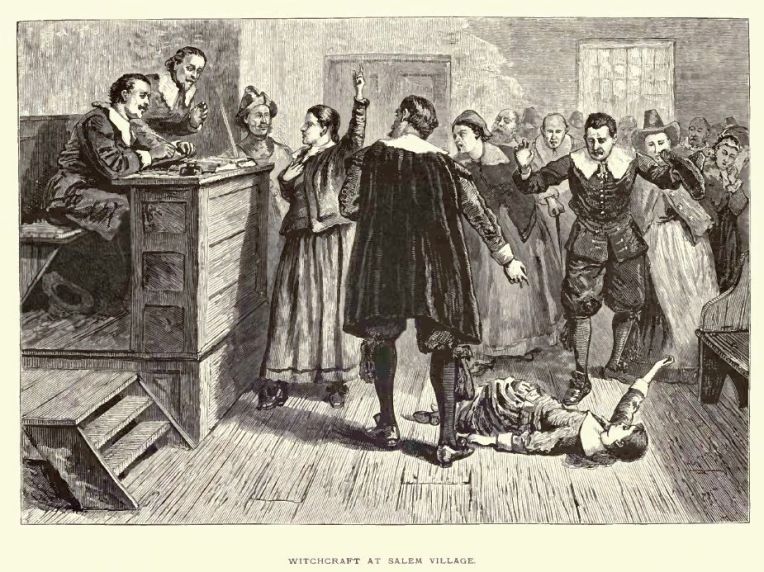
SalemWitchcraftTrial_large

This is the first in a series of posts intended to expose the snobbery that is often entailed by claims of the “progress” of culture. I hope to attack various manifestations of the view that currently popular moral, social, and philosophical views may safely be regarded as superior to those that were popular in past ages. Subsequent posts will deal with issues such as the alleged progress of our moral ideology, our philosophical understanding of the nature of things, and our ability as a culture of foster human thriving. But here I will attack chronological snobbery as it is found in the Supreme Court’s jurisprudence. Continue reading

North Carolina’s HB2 won’t work

Pearl-Jam

North Carolina recently published HB2, a law known as the bathroom law. The reaction has been huge with states and companies starting boycotts. And this morning, Pearl Jam joined the long list of entertainers who have canceled their trip to Raleigh. In short, the law states that people must go to the bathroom of their biological sex rather than gender identity.  The law allows (and encourages) a third bathroom model for people who don’t fit into the traditional genders. This three bathroom model is used in the San Diego airport (not a very conservative place) and so is perhaps not quite as reactionary as it is portrayed. Continue reading