What Role Should Religion Play in American Politics?

biblewithflag

[We’re happy to publish this guest post, written in response to “Reconciling Religion and Politics in Post-Obama America,” by John Griffin.]

In his March 20 post, David takes on a hot topic of late: whether religious views should be granted a more prominent and respectful place in American political discussion.  David’s answer – from his opening account of a God-fearing African American taxi driver to his warning that “failing to validate” religious voices will lead to social fragmentation – is an emphatic YES.  Without a place for such expression, David argues, the public sphere would become exclusionary and – with respect to fostering social cohesion – ineffective.

Historically, David would seem to be arguing the obvious. After all, religious elements have always played a major role in American politics, and to deny them significant voice ignores history and reality.  It turns out, for example, that one of the most religious groups in the American polity – measured by church attendance, prayer and members’ own self-identification – is African American Protestants, also one of the most loyal Democratic voting blocs.  Why then should those who champion progressive causes and view such groups as important political allies go to such lengths to exclude religious views from political discussion? Continue reading
Why Don’t Democrats Take Religion Seriously? (From The Atlantic)

This resonated with my thoughts in my last blog post, so I thought I’d share it here. I stumbled upon this video, which appeared at the bottom of an article I was reading that also seems very much in line with The Brothers Sabey: Do the Culture Wars Really Represent America? Check both of them out, and let us know what you think!

Reconciling Religion and Politics in Post-Obama America

church and state

Hakim’s car smelled faintly of cigarette smoke, but it was clean and he greeted me warmly. Hakim was an African-American man with a raspy voice and a slight southern accent. This was my first experience riding Lyft, and it was a pleasant one. He asked me about my work and told me about his—he recently retired as a parole officer, and drives for Lyft on the weekends. Our conversation eventually turned to politics. I didn’t know what to expect. In the wake of an election that had been described as a “whitelash,” I wanted to tread carefully. I tried to say things that would assure Hakim that I understood something about the racial tensions that were unsurfaced and aggravated during and in response to the election. I wanted him to know that I appreciated President Obama and that I had not supported Trump’s candidacy. I was surprised when he said, “You know, I had a real hard time with this election. I actually voted Republican in the last two. Just couldn’t bring myself to vote for Obama. Religious reasons, you know? I had the same problem with Hillary. But Trump?” The way he said “Trump,” sliding into a raspy falsetto, made me laugh. That and my surprise: a middle-aged, middle-class African-American man voting for McCain and Romney rather than Obama, due to religiously-motivated objections (to gay marriage and abortion, as it turned out). Serendipitously, perhaps, our destination was a church. As I got out, he said, “God bless, my friend.”

I know that people of color are not monolithic, just as I recognize that many are forced to uncomfortable compromises when voting, trying to participate within a system that has often explicitly discouraged their participation, voting for what seems to be the lesser of two evils and the least likely to provoke direct harm to them and their loved ones. It is very likely that Hakim is not consistently conservative. But in a defining moment of American politics, he voted Republican. I’ve often wondered which candidate he voted for in 2016.  He never told me, but apparently it wasn’t a particularly straightforward question for him. Continue reading

Trump’s Mormon (Tabernacle Choir) Problem

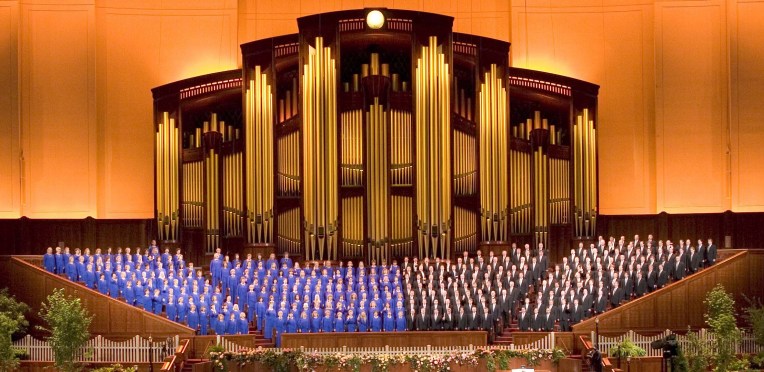
Mormon Tabernacle Choir

It is no secret that Trump has a Mormon problem (see this NY Times article and this Washington Post article, for example). During the troubled campaign, the LDS Church released a statement implicitly responding to (and opposing) Trump’s proposed ban on Muslim immigration, and church-owned Deseret News published an editorial condemning Trump’s misogynistic behavior and rhetoric, calling him to withdraw from the race–something all the more notable because the newspaper had not taken sides politically for 80 years. And although Trump ultimately won Utah, Mormons (in Utah and elsewhere) opposed Trump’s presidency more than any other traditionally conservative religious group. Yesterday, it was announced that the Mormon Tabernacle Choir would be performing at Trump’s election. Continue reading

You’re Conservative. What Do You Think about Trump’s Win?

donald_trump_by_gage_skidmore_5

In short, I’m tired. For over a year, I have paid close attention to this political race. Last night, I stayed up, glued to the screen as my expectations were upturned. At the beginning of the race, I watched the debates with enthusiasm, but I eventually refused to watch them; I thought they were a mindless spectacle, ill-befitting the office of the president. I could not understand why people favored Trump in the Republican Primaries, and I was surprised when he won the nomination. I didn’t think he stood a chance in the general election, and I watched in shock as state after state voted for him. As it became ever more likely that Trump would win the election, my Facebook feed filled with messages of dismay, sadness, and fear. Some of my Latinx students, now sophomores in high school, posted things like, “I’m going to be deported” and “This is the end.” They are young and melodramatic, but I think their fears are real. Other dear friends wrote about their crushed hopes, their sense of rejection, and their growing concerns. No shattered glass ceiling. No continuation of Obama’s legacy. No validation for progressive values. And not just these unmet expectations, but a sense of danger for women, immigrants, Muslims, and other marginalized populations. There is real pain, fear, and sadness among Hillary Clinton supporters today. I feel for and with them. Continue reading

Simplistic Political Morality Won’t Heal Our Country; It Will Make Things Worse

1000px-biohazard-svg


I thought about beginning this post with a not-so-subtle comparison of the current political situation and discourse with the most gossipy and mean-spirited parts of the elementary school playground. Although something about this metaphor appeals to me, I decided against it because I risked doing that which I intend to critique: Dogmatically retaliating against the expression of opinions that oppose mine. So, instead of beginning with satire, let me begin with a confession: I used to think of pubs and bars as immoral places. Continue reading